A well-organized closet makes everyday storage more convenient, especially when it comes to reaching clothes and accessories stored on high shelves. For homeowners with limited space, pull down closet organizers offer a practical way to make upper storage areas more accessible without sacrificing valuable room. Cependant, different designs, matériels, lifting mechanisms, and load capacities can lead to significant price differences. Understanding these factors helps homeowners choose the right product for their needs while helping furniture manufacturers, closet system suppliers, and distributors make informed purchasing decisions.
Dans ce guide, we compare the costs of different pull down closet organizers, explain what influences their prices, and explore how buyers can balance affordability, fonctionnalité, et valeur à long terme.
What Are Pull Down Closet Organizers?
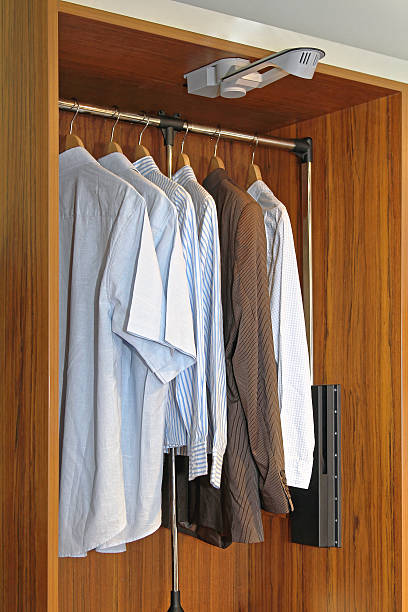
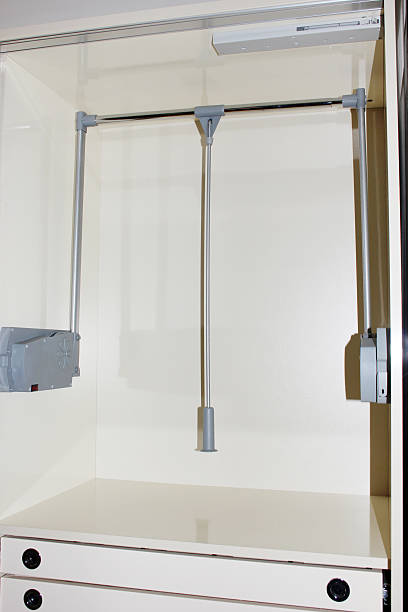
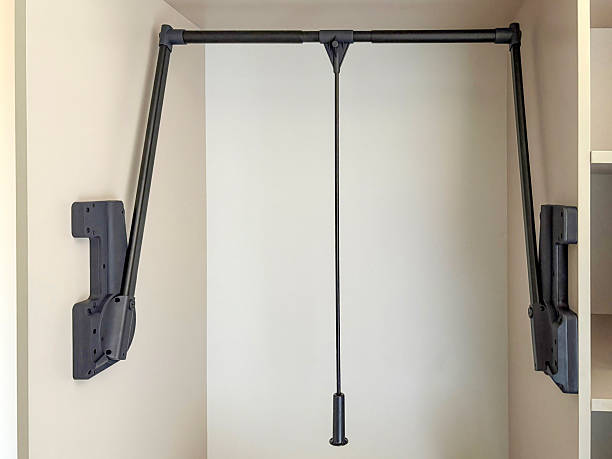
Pull down closet organizers are storage accessories designed to bring clothes and other items from high closet compartments down to a more convenient height. Most models feature a hanging rail connected to a lifting mechanism, allowing users to pull the rail downward when selecting clothing and return it to its original position after use. Depending on the design, the mechanism may use a spring-assisted system, gas-assisted support, or another counterbalancing structure.
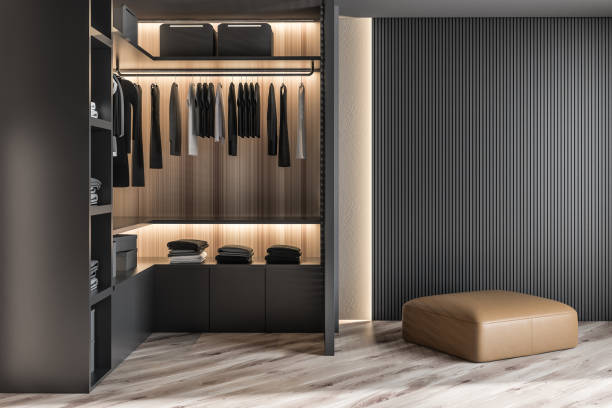
These organizers work particularly well in walk-in closets, fitted wardrobes, and floor-to-ceiling storage systems. They help users make better use of vertical space, reducing the need to leave upper shelves empty or rely on a step stool. For furniture manufacturers and closet hardware distributors, pull down wardrobe lifts also provide an opportunity to offer customers a more functional storage solution.
The cost of a pull down closet organizer depends on more than its basic lifting function. Product dimensions, construction quality, capacité de charge, adjustment options, finition, and installation requirements all influence the final price.
1. Basic Pull Down Closet Organizers: An Affordable Entry-Level Option
Basic pull down closet organizers usually focus on essential functionality. They typically feature a hanging rail, side support arms, and a straightforward lifting mechanism. Some models offer limited width adjustment, while others come in fixed sizes designed for standard wardrobe compartments.
These products generally appeal to budget-conscious homeowners, rental property developers, and buyers who need a simple solution for improving closet accessibility. Their relatively straightforward construction can also make them attractive to furniture manufacturers working with standardized wardrobe designs.
From a cost perspective, basic models often have the lowest initial purchase price. Cependant, buyers should look beyond the price tag when comparing options. The stability of the support arms, the smoothness of the lifting movement, and the durability of the connecting components all affect the product’s performance over time. A low-cost organizer that becomes difficult to operate after repeated use may create more maintenance work and customer complaints than a slightly more expensive alternative.
For distributors purchasing in bulk, basic models can be a practical choice when the target market prioritizes affordability. Before placing an order, it is worth checking the available sizes, rated load capacity, packaging requirements, and quality inspection standards.
2. Gas-Assisted Pull Down Closet Organizers: A Balance of Price and Performance
Gas-assisted pull down closet organizers use a supporting mechanism to help users lower and raise the hanging rail with less effort. Compared with simpler designs, these products often provide a more controlled movement, making them suitable for wardrobes used frequently throughout the day.
The additional mechanism can increase manufacturing costs, particularly when the product requires carefully matched components and consistent performance across different load conditions. Nevertheless, the improved operating experience can justify the higher purchase price for many residential and commercial projects.
When evaluating a gas-assisted wardrobe lift, buyers should consider the relationship between load capacity and the size of the closet compartment. A mechanism designed for a lighter load may not perform well when users fill the rail with heavy winter coats. Similarly, a product with a higher rated capacity should maintain stable movement rather than simply support more weight when stationary.
For European furniture manufacturers and closet system suppliers, gas-assisted models can offer a useful balance between functionality and cost. They suit projects that require a better user experience without necessarily moving into the premium product category. Comparing the mechanism, adjustment range, and expected service life can help buyers determine whether the additional expense delivers meaningful value.
3. Premium Pull Down Wardrobe Lifts: Higher Costs for Better Functionality
Prime pull down wardrobe lifts typically emphasize smoother operation, stronger construction, refined finishes, and more convenient adjustment. Depending on the model, they may include soft-assisted movement, enhanced load-bearing components, improved mounting systems, or wider adjustment ranges.
These features can increase production costs because manufacturers may need more precise components, additional testing, and tighter quality control. Premium products may also require more sophisticated engineering to ensure consistent operation across different wardrobe widths and loading conditions.
Although the initial price is usually higher, premium closet organizers can make sense in luxury residential projects, high-end fitted wardrobes, and furniture collections where the user experience matters as much as appearance. For these applications, reliable performance and a clean, integrated design can help furniture brands differentiate their products from lower-priced alternatives.
Cependant, not every project needs a premium solution. Buyers should identify which features customers genuinely value before selecting a product. If a wardrobe has a standard configuration and relatively light storage requirements, a well-designed mid-range organizer may provide sufficient performance at a lower cost.
4. Adjustable Pull Down Closet Organizers: Paying for Greater Flexibility
Adjustable pull down closet organizers allow users or installers to accommodate different wardrobe widths within a specified adjustment range. This flexibility can simplify product selection when a furniture project includes several cabinet sizes.
Adjustability may increase the initial cost because the product needs additional structural features or more versatile mounting components. Cependant, it can reduce complexity elsewhere in the supply chain. Furniture manufacturers may be able to standardize certain accessories across multiple cabinet configurations, while distributors may need to manage fewer product variations.
The overall financial benefit depends on the project. For a single wardrobe with fixed dimensions, a standard-size organizer may be more economical. For a furniture manufacturer producing multiple wardrobe models, adjustable products may help simplify inventory planning and reduce the risk of ordering incompatible sizes.
Before purchasing, check the minimum and maximum installation widths, mounting requirements, and compatibility with the intended cabinet structure. An adjustment range that does not match the actual wardrobe dimensions offers little practical value, regardless of the product’s flexibility.
5. What Factors Influence the Cost of Pull Down Closet Organizers?
The lifting mechanism is one of the most important cost factors, but it is not the only consideration. Material selection also affects pricing, durabilité, and appearance. Metal support arms, hanging rails, connecting components, and surface finishes must work together to support the intended load. Products designed for frequent use may require more robust construction than organizers intended for occasional household use.
Load capacity also plays a role in product selection. A closet lift designed for heavier clothing loads may require stronger components and a more capable supporting mechanism. Buyers should compare rated capacity, operating smoothness, and stability rather than assuming that a higher capacity automatically means better overall quality.
Product dimensions can influence costs as well. Wider wardrobe lifts may require longer rails and stronger support structures. Specialized sizes or customized finishes may also increase manufacturing expenses, especially when order quantities are limited.
Installation and packaging deserve attention, too. A product that requires complicated assembly can increase labor costs for furniture manufacturers and installers. Meanwhile, bulky packaging can affect shipping expenses, warehouse utilization, and the number of units that fit into a container. For international buyers, these costs can make a meaningful difference to the final landed price.
6. How to Compare Total Costs Instead of Purchase Prices
Comparing pull down closet organizers solely by unit price can lead to poor purchasing decisions. A more reliable approach is to calculate the total cost of ownership, including the purchase price, shipping, installation, quality-related expenses, and potential after-sales costs.
Par exemple, a low-priced product may initially appear attractive to a furniture manufacturer. Cependant, if inconsistent quality leads to additional inspections, installation problems, or replacement requests, the apparent savings can disappear. A more reliable product may cost more upfront but reduce operational disruption and improve customer satisfaction.
Shipping efficiency is particularly important for international B2B buyers. When ordering closet hardware alongside wardrobe accessories, drawer systems, and other storage products, consolidating compatible items can help make better use of container space. A supplier that coordinates multiple product categories may also simplify communication, documentation, and shipment planning.
Buyers should therefore compare quotations on a consistent basis. Confirm the specifications, matériels, rated capacity, packaging, order quantity, delivery terms, and quality requirements before evaluating the final numbers. This approach makes it easier to identify genuine cost advantages rather than choosing the lowest quotation without understanding what it includes.
7. Choosing the Right Pull Down Closet Organizer for Your Business
The most suitable pull down closet organizer depends on your target customers, wardrobe designs, and expected usage conditions. Entry-level products may suit price-sensitive markets, while gas-assisted models can provide a practical balance between affordability and operating comfort. Premium products are often better suited to high-end projects, and adjustable designs can benefit manufacturers managing a variety of cabinet dimensions.
For furniture manufacturers, cabinet makers, wardrobe brands, and hardware distributors, supplier selection matters just as much as product selection. A reliable supplier should provide clear technical specifications, consistent quality standards, suitable product options, and dependable delivery coordination. Access to a broader range of storage hardware can also make it easier to develop coordinated solutions for different wardrobe and home storage projects.
Rather than focusing exclusively on the lowest unit price, buyers should consider how the product fits their overall business model. The right choice combines competitive purchasing costs with dependable performance, manageable installation requirements, and a positive end-user experience.
Conclusion
The cost of different pull down closet organizers varies according to their lifting mechanisms, matériels, capacité de charge, adjustment features, and overall construction. Basic models offer an economical starting point, gas-assisted designs provide a balance between cost and convenience, premium wardrobe lifts focus on enhanced functionality, and adjustable models can bring additional flexibility to larger furniture projects.
For both individual buyers and B2B purchasers, the best decision comes from comparing specifications and total ownership costs rather than unit prices alone. By selecting products that match actual storage requirements and working with dependable suppliers, buyers can improve closet functionality while maintaining better control over purchasing and operating expenses.