When sourcing kitchen hardware for wholesale,
distribution,
furniture manufacturing,
or large-scale projects,
choosing the right supplier model can significantly affect your cost, calidad, opciones de personalización,
and supply chain stability.
Two common options are a kitchen hardware manufacturer and a trading company.
While both can supply products to international buyers,
they operate in very different ways.
A trading company typically connects buyers with multiple factories and manages sourcing,
communication,
documentation,
and shipping.
A manufacturer,
by contrast,
has direct control over at least part of the production process and can usually provide more direct technical and quality support. Sin embargo,
the lowest quotation or the word “factory” alone should not determine your decision.
The better choice depends on your product range,
order volume,
customization requirements,
and long-term business goals.
What Is a Kitchen Hardware Manufacturer?
A kitchen hardware manufacturer focuses on designing,
producing, ensamblando,
and quality-controlling kitchen hardware products.
Depending on its capabilities,
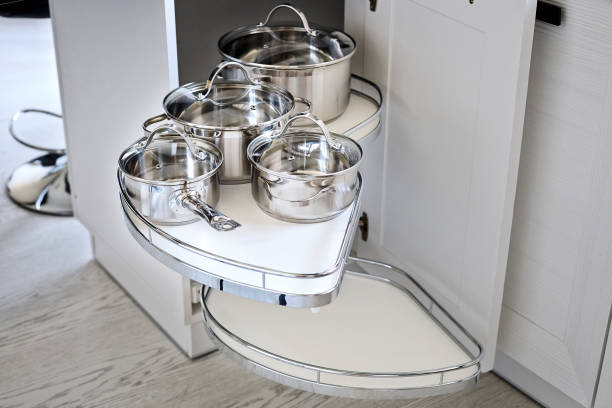
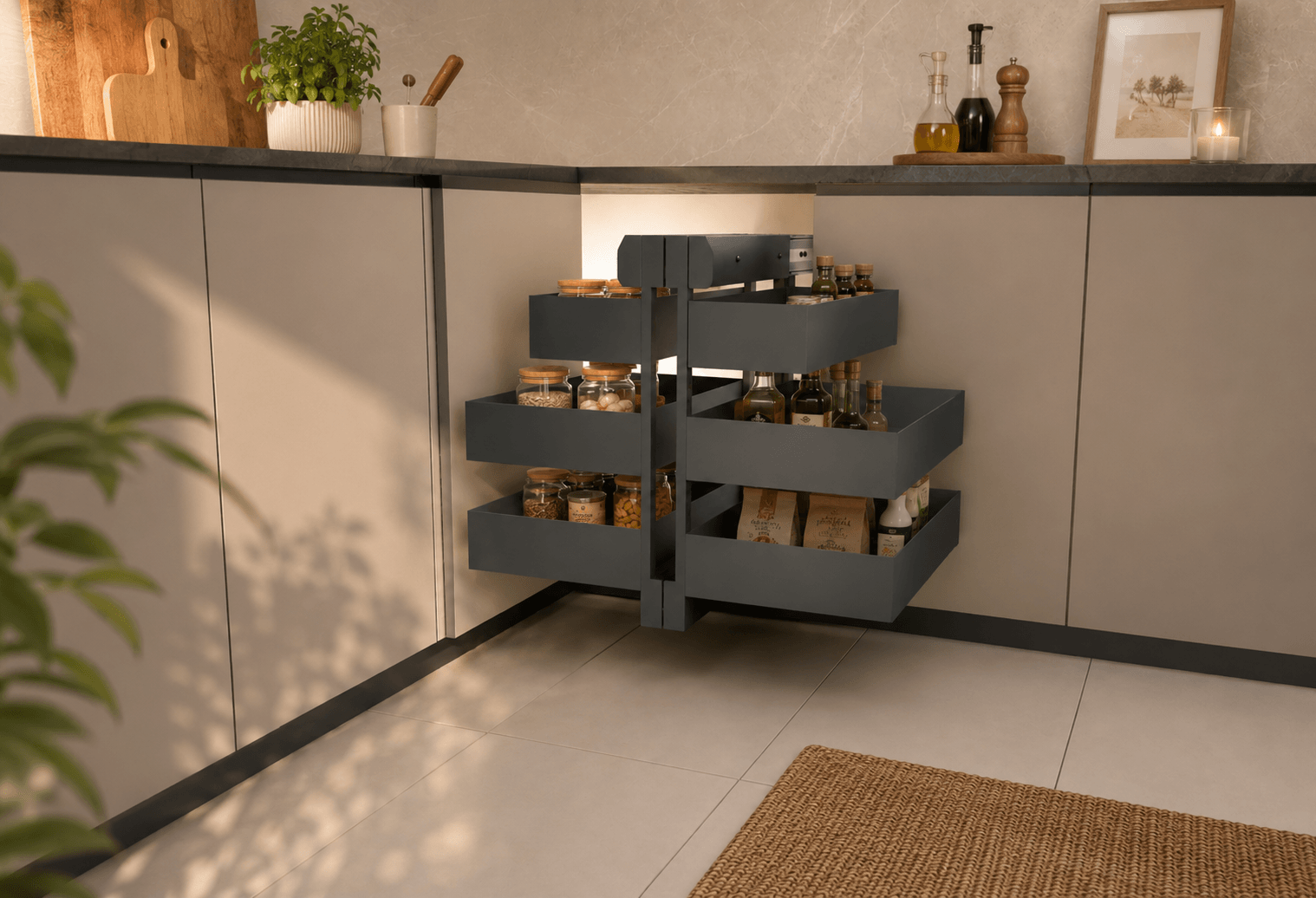
a manufacturer may operate its own production lines for products such as pull-out baskets,
cabinet organizers,
drawer systems, bisagras, soluciones de almacenamiento en esquina,
and other furniture hardware.
The key advantage is production control.
A capable manufacturer can communicate directly with engineering and production teams,
adjust specifications,
improve product structures,
and monitor quality throughout manufacturing.
This becomes particularly important when buyers require OEM or ODM products,
customized dimensions,
special finishes,
private labeling,
or consistent specifications across repeated orders.
For B2B buyers,
production control can also make problem-solving faster.
Instead of passing technical questions between the buyer,
salesperson,
and an external factory,
a manufacturer can often involve the relevant technical team directly.
Manufacturing capability,
standardized processes,
and quality control systems are important indicators when evaluating a supplier for long-term cooperation.
What Is a Kitchen Hardware Trading Company?
A trading company generally acts as a sourcing and supply-chain intermediary.
Rather than manufacturing every product itself,
it works with a network of factories and selects products according to the buyer’s requirements.
This model can provide an important advantage:
product variety.
A trading company may source cabinet hardware,
kitchen storage accessories, herrajes para muebles,
and related products from different factories,
allowing buyers to manage a broader product portfolio through one commercial partner.
For wholesalers and distributors who purchase many categories but do not want to manage numerous factories,
this can simplify procurement.
A good trading company can consolidate orders,
coordinate suppliers,
arrange inspections,
manage export documentation,
and organize shipments.
Sin embargo,
buyers should understand where each product actually comes from.
If the trading company relies heavily on third-party factories, capacidad de producción,
technical control, plazos de entrega,
and quality standards may vary between products.
The quality of the trading company’s supplier-management system therefore becomes just as important as the products themselves.
Kitchen Hardware Manufacturer vs. Trading Company: Diferencias clave
The biggest difference lies in control versus flexibility.
A manufacturer generally provides stronger control over production,
while a trading company often provides broader sourcing flexibility.
1. Product Cost and Pricing
A kitchen hardware manufacturer can often offer more competitive factory-level pricing because the buyer works closer to the production source.
There are fewer commercial layers between manufacturing and purchasing,
which can improve price transparency.
Sin embargo,
this does not mean a manufacturer will always provide the lowest total cost.
A trading company may combine products from several factories and consolidate shipments,
helping buyers reduce procurement and logistics costs across a large product portfolio.
For buyers purchasing dozens or hundreds of different SKUs,
this broader coordination can sometimes offset the additional supplier margin.
Por lo tanto,
buyers should compare total procurement cost,
not simply the unit price. Transporte, embalaje,
inspection,
tooling, Cantidad mínima de pedido,
warehousing,
and supplier-management costs can all influence the final landed cost.
2. Customization and OEM/ODM Capability
Customization is usually one of the strongest reasons to work with a manufacturer.
If you need a specific cabinet size,
mounting structure, finalizar, capacidad de carga,
packaging design, logo,
or product configuration,
direct access to production and engineering teams can make development more efficient.
Trading companies can also support OEM and ODM projects,
but they normally coordinate customization through their partner factories.
This can work well for standard or semi-custom products,
but complicated technical changes may require additional communication and coordination.
If your strategy focuses on product differentiation or private-label kitchen hardware,
a manufacturer with strong engineering and production capabilities is generally the better starting point.
3. Control de calidad
Quality depends on the supplier’s management system,
not simply on whether the company calls itself a manufacturer.
A reliable manufacturer should have clear quality-control procedures covering raw materials,
production processes, asamblea, refinamiento, embalaje,
and final inspection.
Buyers should ask about inspection standards,
quality documentation,
production traceability,
and how the supplier handles non-conforming products.
A trading company can also provide strong quality control if it has an established supplier-audit and inspection system. De hecho,
experienced trading companies may monitor several factories and apply standardized inspection requirements across their supply base.
The key question is therefore not only “Are you a manufacturer?
” but also “How do you control quality?"
4. Gama de productos
This is where trading companies often have an advantage.
A specialized kitchen hardware manufacturer may focus on a particular product category,
such as kitchen storage systems, herrajes para gabinetes,
drawer accessories,
or hinges.
This specialization can create strong technical expertise but may limit the number of unrelated products it can supply.
A trading company can combine products from multiple manufacturers.
For wholesalers and distributors looking for a broad range of kitchen hardware,
this can reduce the number of suppliers they need to manage.
Por ejemplo,
if your purchasing plan includes pull-out pantry systems, organizadores de esquinas ciegas, organizadores de cajones, bisagras, manijas,
and other cabinet accessories,
a capable multi-category supplier can simplify procurement and shipment coordination.
5. MOQ and Order Flexibility
Manufacturers often set MOQs according to production efficiency,
material purchasing,
tooling,
and machine setup.
Large-volume buyers can benefit from economies of scale,
while smaller buyers may find some factory MOQs difficult to meet.
Trading companies may offer greater flexibility by combining demand from different customers or sourcing from factories with different production capabilities. Sin embargo,
MOQ still depends heavily on the actual factory and product.
Instead of assuming that “manufacturer = high MOQ” or “trading company = low MOQ,
” buyers should ask what determines the MOQ and whether the supplier can support mixed-SKU purchasing.
Which One Is Better for B2B Kitchen Hardware Procurement?
There is no universal answer.
The right choice depends on what you value most.
If your priority is competitive factory pricing, personalización,
technical development,
stable product specifications,
and long-term production cooperation,
a reliable kitchen hardware manufacturer is usually the stronger option.
If your priority is product variety,
supplier consolidation,
mixed-SKU purchasing,
sourcing convenience,
and one-stop procurement,
a professional trading company may be more suitable.
For established wholesalers,
furniture manufacturers, distribuidores, y compradores de proyectos,
the most practical solution can sometimes be a hybrid supplier model.
A supplier may have its own manufacturing capabilities for core kitchen storage products while also maintaining a qualified network of partner factories for complementary categories.
This approach combines manufacturing control with broader product coverage.
How to Choose a Reliable Kitchen Hardware Supplier
Regardless of whether you choose a manufacturer or trading company,
evaluate the supplier beyond its website and quotation.
Start by checking its actual product expertise, años de experiencia,
production or supplier-management capabilities,
quality-control procedures,
customization support,
export experience,
and delivery performance.
You should also ask for product samples before placing a significant order. Para herrajes de cocina,
inspect dimensions, espesor del material, tratamiento superficial, capacidad de carga, buen funcionamiento,
installation accuracy, embalaje,
and overall finishing.
For customized products,
confirm technical drawings and specifications before mass production.
Most importantly,
consider whether the supplier can support your future purchasing needs.
A supplier that performs well on one small order may not necessarily handle a growing product portfolio,
repeat orders,
multiple containers,
or market-specific requirements.
Conclusión
Choosing between a kitchen hardware manufacturer and a trading company is not simply a decision between “factory price” and “higher price.” It is a decision about how much production control,
product flexibility,
technical support,
and supply-chain coordination your business needs.
A manufacturer can offer stronger production control, personalización,
and technical expertise,
while a trading company can provide broader sourcing capabilities and procurement convenience.
For B2B buyers with complex kitchen hardware requirements,
the best partner may be one that combines manufacturing capability,
qualified supplier management, seguro de calidad,
and multi-category sourcing.
Instead of asking only,
“Manufacturer or trading company—which is better?",
ask a more valuable question:
“Which supplier model can give my business the best combination of quality, costo,
flexibility,
and long-term supply reliability?
” That is the real basis for making a successful kitchen hardware sourcing decision.