Schrank-Organizer-Hardware 101: Funktionen, Typen, und Anwendungen
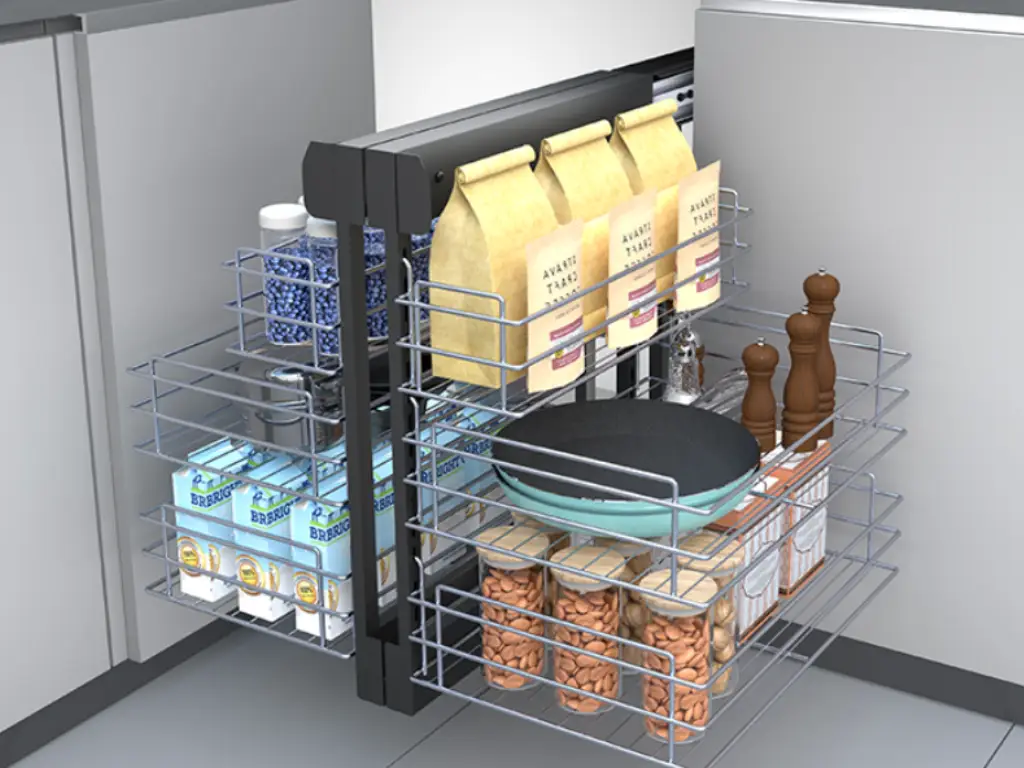
Schrankorganisator-Hardware spielt eine entscheidende Rolle bei der Verbesserung der Funktionalität und des Benutzererlebnisses moderner Möbel. Für Möbelunternehmen, Das Verständnis des Umfangs und der Anwendung dieser Komponenten ist für die Entwicklung wettbewerbsfähiger und anwenderorientierter Produkte von entscheidender Bedeutung.
Hauptfunktionen der Schrank-Organizer-Hardware:
- Raumoptimierung: Diese Komponenten tragen dazu bei, jeden Zentimeter des Schrankinnenraums auszunutzen, insbesondere in Küchen und Bädern.
- Zugänglichkeit: Ausziehbare Tabletts, rotierende Regale, und Liftsysteme erleichtern den Zugang für Benutzer, Dadurch entfällt die Notwendigkeit, tief in Schränke zu greifen.
- Organisation: Spezielle Hardware wie Schubladenteiler und Utensilienablagen ermöglichen eine bessere Kategorisierung und Aufbewahrung von Gegenständen.
- Ergonomie und Sicherheit: Soft-Close-Systeme und geführte Schieber reduzieren den Lärm und erhöhen die Sicherheit, indem sie abrupte Bewegungen minimieren.
Gängige Arten von Schrank-Organizer-Hardware:
- Ausziehbare Körbe und Regale: Auf Kufen montiert, Diese sind ideal für Unterschränke und Vorratskammern.
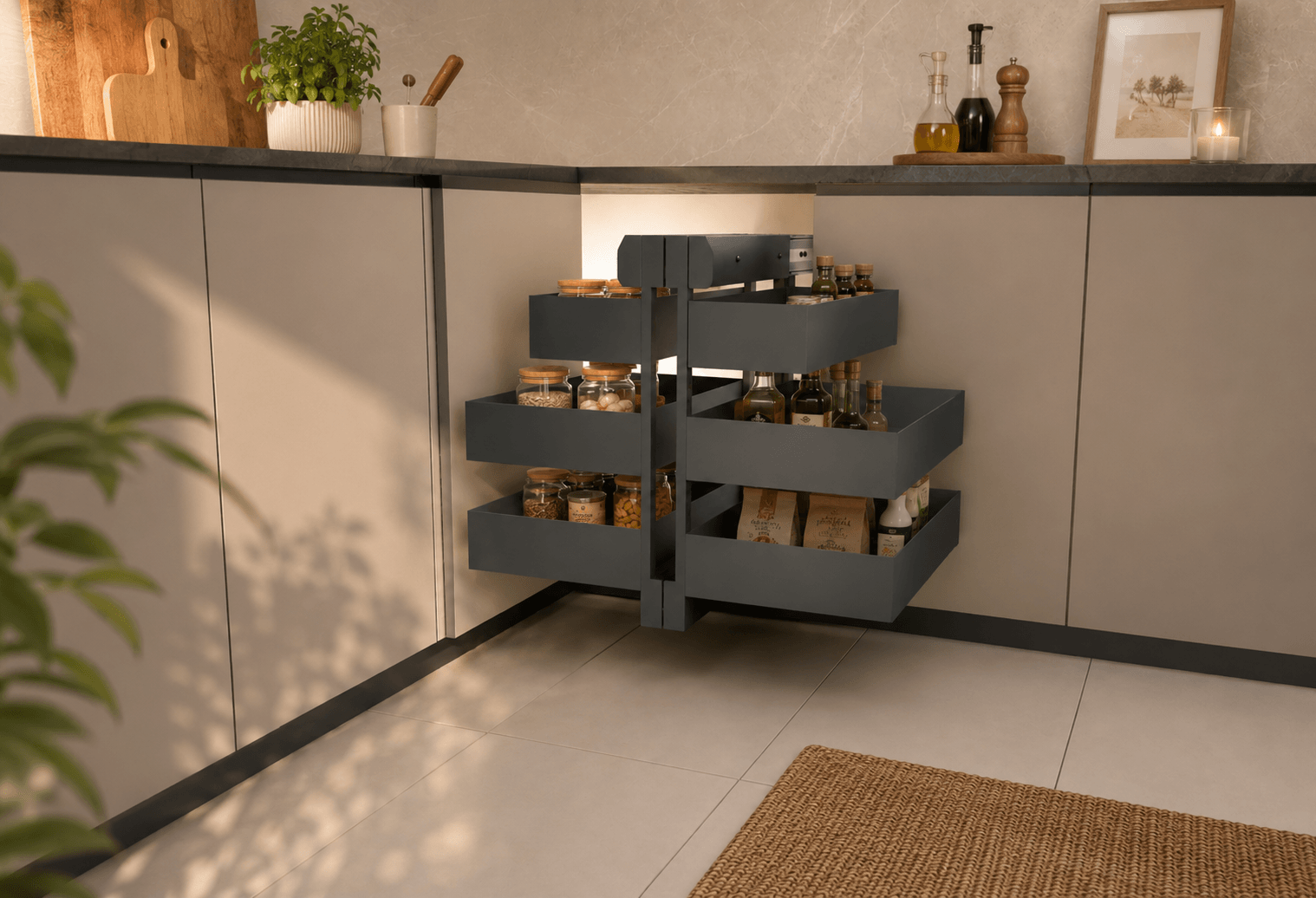
- Faule Susann und rotierende Tabletts: Wird häufig in Eckschränken verwendet, um eine einfache Drehung und einen einfachen Zugriff zu ermöglichen.
- Blinde Eckeinheiten: Entwickelt, um mithilfe von Ausschwenk- oder Schiebemechanismen Platz an schwer zugänglichen Stellen zurückzugewinnen.
- Abfallbehälterauszüge: Hardwaremontierte Systeme, die eine verdeckte Abfallentsorgung ermöglichen.
- Schubladeneinsätze und Teiler: Organisieren Sie Innenräume für Besteck, Gewürze, oder Werkzeuge.
- Aufzugssysteme: Entwickelt für schwere Geräte, Diese ermöglichen eine einfache vertikale Bewegung aus den Unterschränken heraus.
Anwendungen im Möbelbau:
Möbelhersteller integrieren Schrankorganisator-Hardware, um den steigenden Verbraucheranforderungen an Funktionalität gerecht zu werden, Bequemlichkeit, und Raumeffizienz. Diese Lösungen beschränken sich nicht nur auf Küchen, sondern kommen auch in Schränken zum Einsatz, Büros, und Hauswirtschaftsschränke. Die Auswahl der richtigen Komponenten trägt direkt zum wahrgenommenen Wert eines Produkts bei, langfristige Verwendbarkeit, und Marktwettbewerbsfähigkeit.
So wählen Sie die richtige Schrank-Organizer-Hardware für Ihr Möbelgeschäft aus
Technische Spezifikationen und Compliance-Standards
1. Materialauswahl
Die Wahl des richtigen Materials ist von grundlegender Bedeutung für die Haltbarkeit, Belastbarkeit, und ästhetische Integration der Schrank-Organizer-Hardware. Zu den gängigen Materialien gehören::
- Kaltgewalzter Stahl: Bietet hervorragende Festigkeit und Kosteneffizienz. Oft mit Pulverbeschichtung oder Verzinkung behandelt, um die Korrosionsbeständigkeit zu verbessern. Ideal für Hochleistungsanwendungen, kann jedoch rosten, wenn die Beschichtung beschädigt ist.
- Edelstahl (z.B., SS304): Hohe Korrosionsbeständigkeit, Geeignet für Küchen- und Badezimmerumgebungen. Etwas teurer, erfüllt aber die Anforderungen an Hygiene und Feuchtigkeitsbeständigkeit.
- Aluminiumlegierung: Leicht, korrosionsbeständig, und oft eloxiert für zusätzlichen Oberflächenschutz. Bestens geeignet für moderne Designs oder dort, wo einfache Handhabung und Installation im Vordergrund stehen.
- Technische Kunststoffe (ABS, Nylon): Wird in Hilfskomponenten wie Dämpfungssystemen oder Drehgelenken verwendet. Bietet gute Flexibilität und Geräuschreduzierung, ist jedoch für Hochlastbedingungen weniger geeignet.
Bei der Materialauswahl, Es ist auch wichtig, die Einhaltung zu überprüfen RoHS und REACH-Umweltstandards, insbesondere für exportorientierte Möbelunternehmen mit Fokus auf Europa oder Nordamerika. Zertifizierte Materialien gewährleisten Sicherheit und Einhaltung gesetzlicher Vorschriften während des gesamten Produktlebenszyklus.
2. Strukturelles Design
Die Struktur der Schrankorganisator-Hardware wirkt sich direkt auf deren Tragfähigkeit aus, Bewegungsglätte, und Raumnutzung:
- Gleitschienen: Wählen Sie zwischen Einzelverlängerung, Vollauszug, oder dreiteilige Soft-Close-Schienen je nach Schubladentiefe und Nutzungshäufigkeit.
- Eckmechanismen: Für blinde Eckschränke, Zu den Optionen gehören ausziehbare Körbe, magische Ecken, oder Schaukeltabletts. Jede Struktur variiert in der Effizienz der Raumrückgewinnung und der Lastverteilung.
- Stützrahmen: Dickere Stahlrahmen bieten eine bessere Stabilität, insbesondere für kommerzielle Anwendungen. Überprüfen Sie die Qualität der Schweißnähte und der Verstärkungen.
3. Installationskompatibilität
Eine effiziente Installation reduziert Arbeitskosten und Fehlerquoten:
- Stellen Sie die Kompatibilität mit der Standardplattendicke sicher (16mm, 18mm, 25mm).
- Entscheiden Sie sich für Schnellmontagehalterungen oder werkzeuglose Systeme, um die Installationszeit zu verkürzen.
- Verstellbare Befestigungslöcher und universelle Montagesätze ermöglichen Flexibilität bei verschiedenen Schrankmarken.
Ausrichtung der Hardware an der Marktpositionierung und den Bedürfnissen der Endbenutzer
1. Designausrichtung und Stilanpassung
Beschläge sollten den optischen Stil der Möbel ergänzen:
- Minimalistische Innenräume Profitieren Sie von verdeckten Auszügen und rahmenlosen Organizern.
- Traditionelle Schränke bevorzugen oft verzierte ausziehbare Tabletts oder sichtbare Scharniere mit antikem Finish.
- Farblich abgestimmte Komponenten (z.B., mattschwarz, Champagnergold) kann den visuellen Zusammenhalt verbessern.
2. Endbenutzerpräferenzen und funktionale Erwartungen
Gewerbliche Käufer legen Wert auf Leistung und Langlebigkeit, während Privatkunden oft Wert auf Benutzerfreundlichkeit und leisen Betrieb legen:
- Soft-Close-Mechanismen verbessern das Benutzererlebnis in gehobenen Häusern und Hotels.
- Modulare Designs sprechen den Baumarkt an und ermöglichen eine spätere Erweiterung.
- Für seniorengerechte oder barrierefreie Möbel, Ziehen Sie Gleitschienen mit geringerem Widerstand und ergonomische Griffe in Betracht.
OEM vs. Markenhardware: Was für Ihr Unternehmen besser ist?
| Besonderheit | OEM-Hardware | Markenhardware (z.B., Rev-A-Regal, Blum) |
| Kosten | Niedriger pro Einheit; anpassbar | Höher pro Einheit; einheitliche Preisgestaltung |
| Mindestbestellmenge | Erfordert oft hohe Mindestbestellmengen | Erhältlich in kleinen Mengen |
| Vorlaufzeit | Länger (insbesondere ausländische Lieferanten) | Kürzer; lokal oder regional bestückt |
| Qualitätskontrolle | Variiert; erfordert strenge QC-Maßnahmen | Zertifiziert und standardisiert |
| Anpassung | Hoch; Maßgeschneiderte Abmessungen und Ausführungen | Beschränkt auf Katalogoptionen |
| Garantie & Unterstützung | Verhandelbar, manchmal schwach | Standardisiert; stärkerer technischer Support |
Markenbeschläge für Schrankorganisatoren bieten bewährte Haltbarkeit und vereinfachte Beschaffung. Jedoch, OEM-Lösungen können bessere Margen und Designflexibilität bieten, insbesondere für Private-Label-Möbelhersteller. Für welche Route Sie sich auch entscheiden, sorgen für gründliche Qualitätskontrollen, klare Kommunikation, und Supportvereinbarungen nach dem Verkauf.
Installations- und Kompatibilitätstipps zur Vermeidung kostspieliger Fehler
Die ordnungsgemäße Installation der Schrank-Organizer-Hardware ist nicht nur für die Zufriedenheit der Benutzer, sondern auch für die Reduzierung langfristiger Garantieansprüche und Serviceeinsätze von entscheidender Bedeutung.
Überlegungen vor der Installation
- Präzise Messungen: Messen Sie immer die Innenmaße des Schrankraums, inklusive Freiraum für Ausschieber oder rotierende Teile.
- Integrität der Montageoberfläche: Stellen Sie sicher, dass Seitenwände und Grundstrukturen das vorgesehene Gewicht und die mechanische Kraft der Hardware tragen können.
- Verwendung von Vorlagen: Für Konsistenz in der Serienproduktion, Verwenden Sie für jeden Hardwaretyp spezifische Montagevorrichtungen und Schablonen.
Kompatibilitätsprüfungen
- Schubladenführungen: Überprüfen Sie, ob die Hardware mit dem Material des Schubladenkastens kompatibel ist, Gewicht, und Bewegungsbedürfnisse.
- Türstörung: Stellen Sie sicher, dass die Öffnungswinkel benachbarter Schranktüren die Bewegung des Organizers nicht behindern.
- Freiräume und Hindernisse: Bewerten Sie die Sanitäranlagen, elektrische Verkabelung, und andere Elemente, die mit den Ausziehmechanismen in Konflikt geraten können.
Installationsablauf
- Standardisieren Sie Ihren Installationsprozess für Konsistenz über alle Produktlinien hinweg.
- Schulen Sie Ihre Mitarbeiter über Drehmomentgrenzen, Ausrichtungswerkzeuge, und Befestigungsmöglichkeiten, um eine optimale Montage zu gewährleisten.
- Führen Sie während der Qualitätskontrollinspektionen abschließende Bewegungs- und Stabilitätstests durch.
Beschaffung von Schrank-Organizer-Hardware: Lieferanten, Kosten, und Überlegungen zur Vorlaufzeit

Die Sicherstellung einer zuverlässigen und kostengünstigen Versorgung mit Schrank-Organizer-Hardware ist eine entscheidende Komponente für den Erfolg der Möbelherstellung. Über die Kosten hinaus, Unternehmen müssen die Stabilität der Lieferkette berücksichtigen, Qualitätssicherung, und Kundendienst.
Lieferantentypen
- OEM-Hersteller: Bieten Sie kundenspezifische Anpassungen und Großserienfertigung an, erfordern jedoch eine detaillierte Überwachung und längere Vorlaufzeiten.
- Markenvertriebspartner: Stellen Sie einsatzbereite Hardware mit bewährter Leistung, aber zu höheren Stückkosten bereit.
Kostenüberlegungen
- Der Stückpreis variiert je nach Material, beenden, Komplexität, und Lautstärke.
- Versteckte Kosten können Werkzeugkosten umfassen (für OEM), Fracht, Einfuhrzölle, und Probentests.
Vorlaufzeit & Logistik
- Inländische Lieferanten bieten oft schnellere Lieferzeiten (2–4 Wochen), während sich die Produktion im Ausland auf 8–12 Wochen erstrecken kann.
- Berücksichtigen Sie Feiertage, Zollabfertigung, und unerwartete Verzögerungen bei der Planung von Beschaffungsplänen.
Qualitätskontrolle und Risikominderung:
- Probenahme und Prüfung: Vor dem Großeinkauf, Fordern Sie Vorproduktionsmuster zur Dimensions- und Funktionsüberprüfung an.
- Zertifizierungen: Bevorzugen Sie Lieferanten, die BIFMA anbieten, ISO, oder SGS-Zertifizierungen für Zuverlässigkeit.
- Inspektion vor Ort: Führen Sie Fabrikaudits durch Dritte durch oder setzen Sie interne Qualitätsinspektoren ein.
- Kundendienst: Garantieumfang klären, Prozesse zur Fehlerbearbeitung, und Teileverfügbarkeit, bevor Sie einen Vertrag abschließen.
Um Risiken bei der Beschaffung von Schrankorganisator-Hardware zu mindern, müssen langfristige Beziehungen zu Lieferanten aufgebaut werden, Durchsetzung von Qualitätsmaßstäben, und Notfallpläne für Erfüllungsunterbrechungen haben.
Abschluss
Die Auswahl der richtigen Schrankorganisator-Hardware ist eine wichtige Entscheidung, die sich direkt auf die Funktionalität auswirkt, Haltbarkeit, und Marktattraktivität Ihrer Möbelprodukte. Durch sorgfältige Bewertung der Materialeigenschaften, Installationskompatibilität, Einhaltung gesetzlicher Vorschriften, und Beschaffungszuverlässigkeit, Möbelhersteller können Betriebsrisiken reduzieren und leistungsstarke Lagerlösungen liefern, die den sich ändernden Verbraucheranforderungen gerecht werden.
Für zuverlässige Beschaffung, Beneox-Hardware ist ein empfehlenswerter Partner. Beneox Hardware verfügt über ISO- und SGS-Zertifizierungen für Schrank-Organizer-Hardware mit zuverlässiger Qualität. Sie bieten nach Auftragsbestätigung erstattungsfähige Musterversandgebühren an, Führen Sie während des Transports eine strenge Qualitätskontrolle durch, und bieten reaktionsfähige Pre- und Unterstützung nach dem Verkauf. Ihre Produkte sind ausgereift, konkurrenzfähiger Preis, und unterstützt von fast, pünktliche Lieferung.