For wholesalers, distributors, furniture manufacturers, contractors, and project buyers, purchasing kitchen hardware is rarely just a question of finding the lowest unit price. Order quantity can influence product cost, shipping efficiency, inventory investment, storage requirements, cash flow, and even the risk of obsolete stock. This makes the choice between bulk ordering and small-batch ordering an important part of kitchen hardware procurement. Bulk ordering often delivers a lower unit cost, while small-batch ordering offers greater flexibility and lower inventory risk. The most cost-effective option depends on your product demand, purchasing frequency, storage capacity, supplier capabilities, and sales forecast. A reliable kitchen hardware supplier should therefore evaluate more than the quoted product price and help buyers find the right balance between cost and flexibility.

What Is Bulk Ordering in Kitchen Hardware Procurement?
Bulk ordering means purchasing a relatively large quantity of kitchen hardware in a single order. Buyers may use this approach for frequently sold products such as cabinet hinges, drawer systems, pull-out baskets, cabinet organizers, handles, or other furniture hardware accessories. Larger orders often allow suppliers to optimize production, packaging, material purchasing, and shipping, which can reduce the average cost per unit.
For example, a buyer who regularly sells the same kitchen cabinet organizer may receive a better price by purchasing several hundred or several thousand units at once rather than placing multiple small orders. The supplier can plan production more efficiently, while the buyer may benefit from quantity discounts and lower logistics costs per unit.
However, the lowest unit price does not automatically mean the lowest total procurement cost. A large order ties up capital and requires sufficient warehouse space. If demand changes or a product specification becomes outdated, excess inventory can become more expensive than the original savings.
What Is Small-Batch Ordering?
Small-batch ordering involves purchasing smaller quantities at more frequent intervals. This approach can work well for buyers who are testing new kitchen hardware products, managing unpredictable demand, serving multiple markets, or carrying a large number of SKUs.
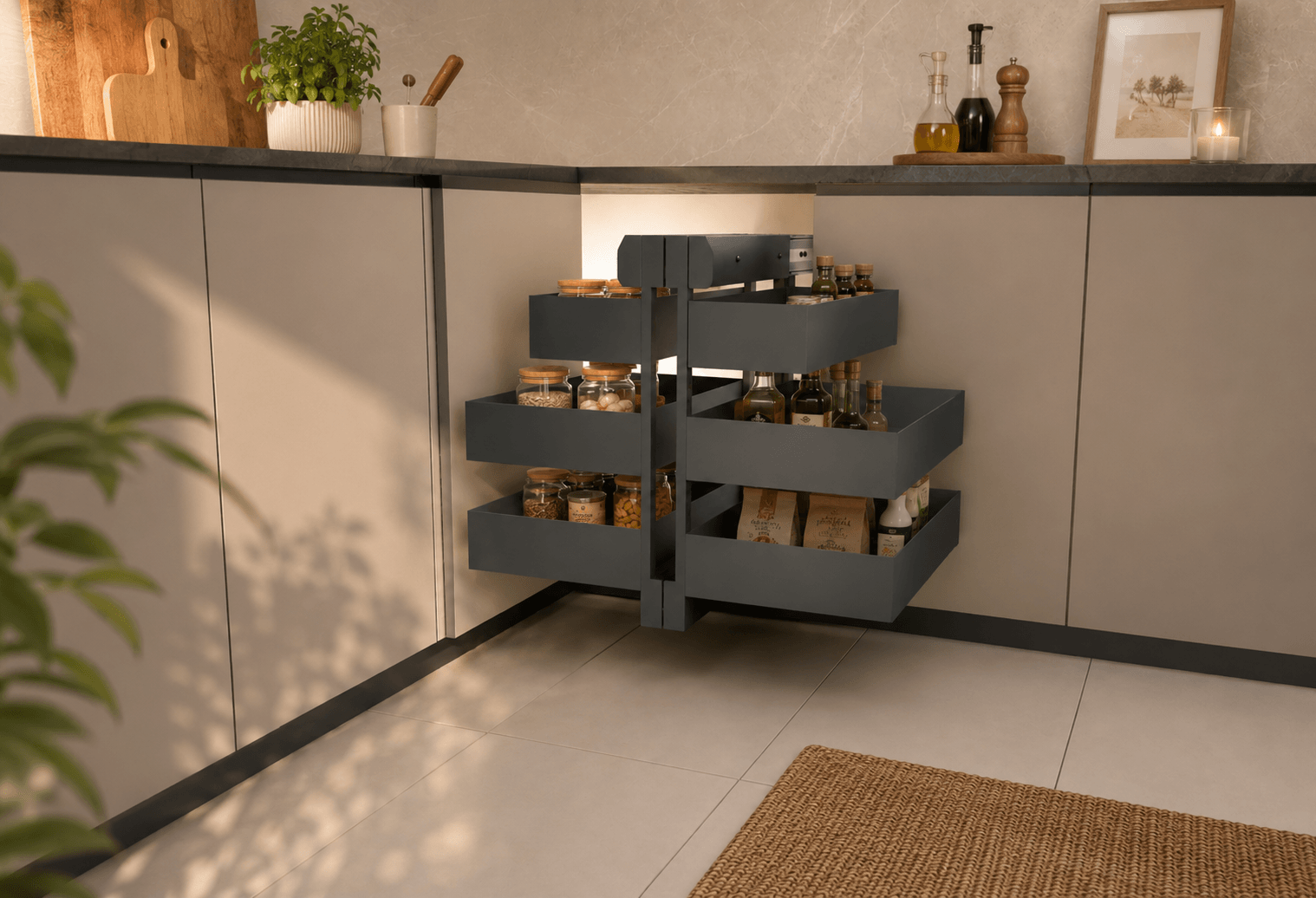
For example, a distributor may want to introduce a new pull-out pantry organizer but does not yet know how customers will respond. Ordering a smaller initial batch allows the distributor to test sales performance without committing significant capital to inventory. If the product performs well, the buyer can increase the next order.
The main disadvantage is that small orders may carry higher unit prices. Production setup, packaging, inspection, and shipping costs still exist even when the order quantity decreases. Frequent shipments can also increase logistics expenses and require more purchasing and supplier coordination.

Bulk Ordering vs. Small-Batch Ordering: The Real Cost Comparison
The best way to compare the two strategies is to look beyond the product quotation. A buyer should consider the total cost of procurement, which includes product price, shipping, warehousing, inventory carrying costs, quality inspection, administrative work, and the potential cost of unsold products.
Bulk ordering usually performs better when demand is stable and predictable. A large order can reduce unit costs and make better use of shipping capacity. If several kitchen hardware products can be consolidated into one shipment, buyers may also reduce the average logistics cost per product. This becomes particularly valuable for international B2B procurement, where freight can represent a meaningful portion of the landed cost.
Small-batch ordering, on the other hand, can be more cost-effective when demand is uncertain. Although the unit price may be higher, the buyer reduces the amount of capital sitting in inventory. Lower inventory also means less warehouse space, less risk of damage, and less exposure to slow-moving or discontinued products.
Therefore, the right question is not simply “Which has the lower unit price?” but “Which ordering strategy produces the lower total cost over the entire purchasing cycle?”
When Bulk Ordering Makes More Financial Sense
Bulk ordering is generally attractive when you already have reliable sales data. If a particular kitchen hardware product consistently sells every month, maintaining sufficient inventory can help you take advantage of quantity pricing and avoid frequent replenishment.
Another important factor is supplier production efficiency. Many manufacturers can offer better pricing when they produce larger quantities because raw materials, labor, packaging, and production schedules become easier to optimize. Buyers who can provide clear forecasts and stable order volumes may also negotiate better commercial terms.
Shipping efficiency is another advantage. Instead of arranging several small shipments, buyers can consolidate more products into one shipment. For international buyers, this can improve container utilization and reduce the average freight cost per unit. A kitchen hardware supplier with multiple product categories may also help combine different SKUs into a coordinated shipment.
However, bulk ordering works best when the buyer has enough warehouse capacity and strong inventory management. Otherwise, the apparent purchasing savings can disappear through storage costs and slow-moving inventory.

When Small-Batch Ordering Is the Better Choice
Small-batch ordering makes more sense when demand is difficult to predict or when a buyer is expanding its product range. New products require market validation before buyers commit to significant inventory. A smaller initial order provides useful sales data while limiting financial exposure.
This strategy can also benefit distributors serving different markets. Kitchen hardware preferences can vary by region, cabinet construction, installation standards, and customer expectations. Instead of purchasing a large quantity of one specification, buyers can test several models and gradually increase orders for the strongest performers.
Small-batch procurement also provides greater flexibility when product designs change. Kitchen hardware is continuously evolving, and buyers may need to introduce new finishes, sizes, installation methods, or functional features. Smaller inventory commitments make it easier to adapt without being left with large quantities of outdated products.
For businesses with limited warehouse space or tighter cash flow, this flexibility can be particularly valuable.
The Role of Your Kitchen Hardware Supplier
Your choice of supplier can significantly influence whether bulk or small-batch ordering becomes more economical. A capable kitchen hardware supplier should offer more than competitive product prices. They should provide reliable production planning, quality control, packaging options, logistics coordination, and flexible order support.
For example, a supplier with a broad product portfolio may allow buyers to source multiple categories from one supply chain. Instead of placing separate orders with several manufacturers, buyers can coordinate products through one supplier and potentially consolidate shipments. This can reduce communication costs, purchasing workload, and logistics complexity.
Supplier reliability also matters. If a bulk order arrives late or contains inconsistent products, the resulting costs can exceed the original quantity discount. Quality consistency, inspection procedures, lead time, and after-sales support should therefore form part of the purchasing evaluation.
A transparent supplier should also help buyers understand MOQ requirements, production lead times, packaging options, and possible quantity-based pricing before the order is confirmed.

How to Choose the Right Ordering Strategy
There is no universal order quantity that works for every kitchen hardware buyer. Instead, start with your historical sales data. Identify which products have stable demand, which products sell seasonally, and which products remain unpredictable.
For high-volume and fast-moving products, bulk ordering can often deliver the strongest cost advantage. For new products, low-volume SKUs, or products with uncertain demand, small-batch ordering usually provides better flexibility.
A hybrid purchasing strategy can often deliver the best results. Keep high-demand products in larger quantities while purchasing new or slow-moving products in smaller batches. This approach allows buyers to control inventory risk without giving up the cost advantages of volume purchasing.
It is also useful to negotiate with suppliers based on annual demand rather than focusing only on individual orders. If your total yearly requirement is significant, a supplier may be able to offer better pricing or production planning even if you receive the goods in several batches. This approach combines the purchasing advantages of larger demand with the inventory flexibility of smaller deliveries.
Conclusion
Bulk ordering is not always cheaper, and small-batch ordering is not always more flexible in the long run. The most cost-effective strategy depends on the relationship between unit price, demand, inventory, logistics, and cash flow.
Bulk ordering tends to work best for established, fast-moving kitchen hardware products with predictable demand. Small-batch ordering is usually better for new products, uncertain markets, and businesses that want to minimize inventory risk. For many B2B buyers, a hybrid strategy offers the most practical balance.
Ultimately, choosing the right kitchen hardware supplier is just as important as choosing the right order quantity. A supplier with a broad product range, reliable quality control, flexible production capabilities, and efficient logistics can help you reduce the total cost of procurement rather than simply lowering the quoted unit price.